All posts by Asia Reveal Tour Laos

Boun Pi Mai – Activity frame

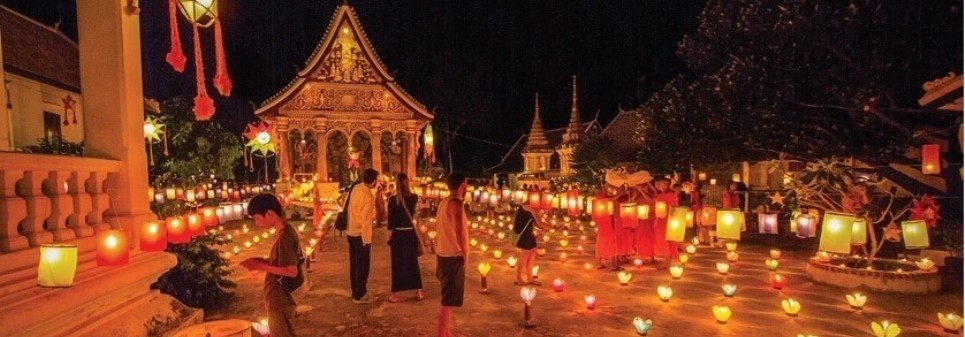
Lao New year (Pi Mai Lao) is one of the most important dates in the fifth month of the Buddhist calendar in the April 13th – 15th, although the celebration can last more than a week in towns like Luang Prabang. The weather in this month is the hottest of the year, so people throw water with blessing by Sok Dee Pi Mai or Happy New Year.
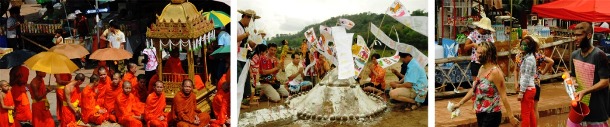
Boun Pi Mai descript (1)
Today we will introduce you the frame of basic activities that Lao people prepare and celebrate yearly on this occasion. The main venue is in Luang Prabang.
1. Starting water throwing to passers-by on around the streets (9th or 10th April)
2. Traditional dance show and popular Lao folk songs at That Luang Ground (The old stadium on11th April night)
3. Beauty pageant contest of Nang Sang Khan (Miss Lao New Year) at That Luang Ground (12th April night)
4. Houses, altars, value belongings and temples are cleaned and renewal on13th April, the last day of the passing year (Sang Khan Louang)
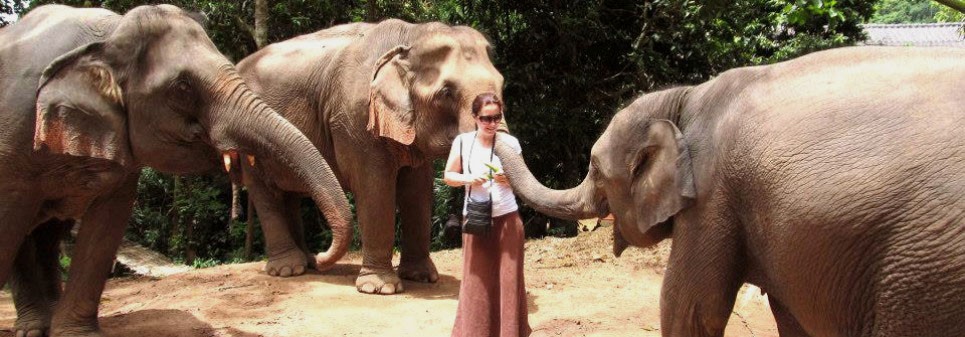
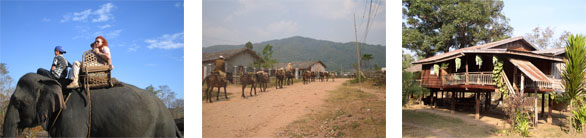
5. Elephants procession from Wat Mai to Wat Xieng Thong, Luang Prabang
6. Market Fair in the big avenue of Luangprabang on early morning 14th is called rest day (Sang Khan Naow)
7. Thousands of Sand stupas are built on Mekong River beach and temples for fortune and having good luck in the afternoon 14th.
8. Tai Lue textile exhibition at the Pha Nom Village or weaving villages around Luang Prabang
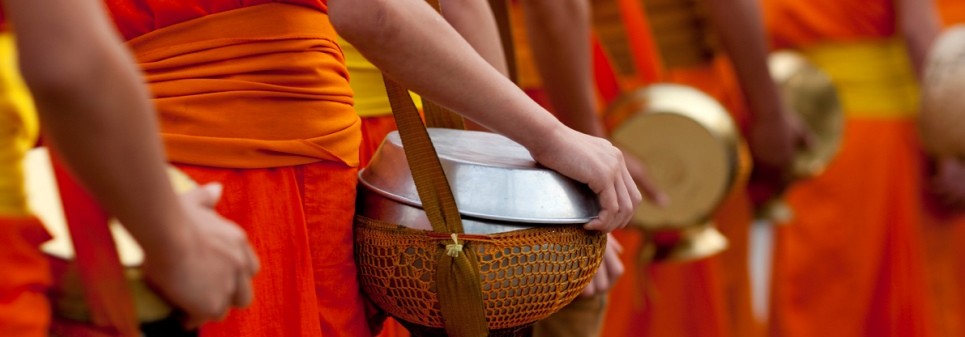
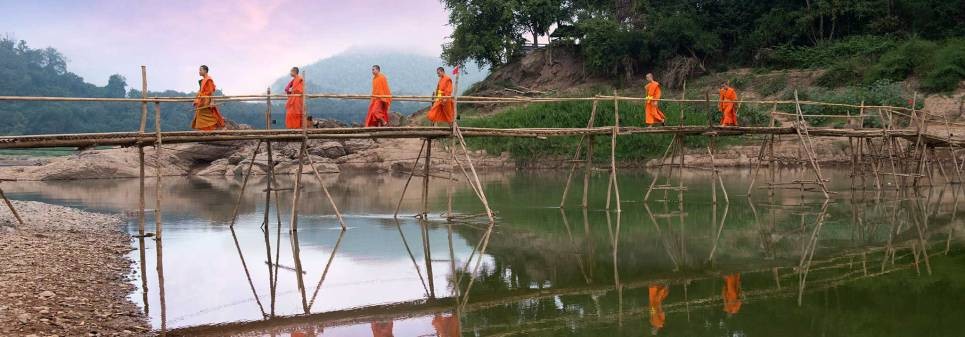
9. Sai Baht to monks and Mount Phou si (alms offering ceremony) is taken place in the early day on 15th is the laos new year day (Sang Khan Khuen)
10. Nang Sang Khan Parade from Wat That Noy to Wat Xieng Thong as well as honoring procession all the Awards of Luang Prabang (15th late afternoon)
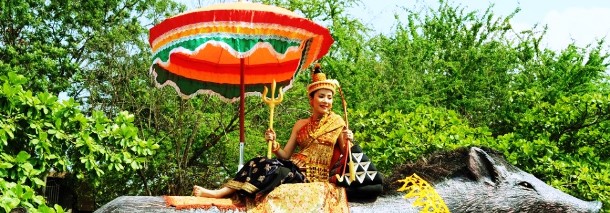
Boun Pi Mai descript 3
11. At the night time, traditional music and dance is held at the National museum.
12. Soo Kwan or Baci ceremony is carried out to welcome Lao New Year as well as to wish the elders good health and long life. (16th April is the welcoming New Year’s day)
13. On the following day, holy statue Prabang Image is brought from the national museum to Wat Mai for 3 days (watering ceremony) asking good luck for the coming year.
14. People visit Caves and water falls as picnic holiday.
15. Pra Marn watering ceremony at Wat Xieng Thong for 7 days, after 2 weeks.

Special Tips for you:
1. To secure all service for your holiday,  book flights and accommodation well in advance. Before/after Laos New Year, airfare Vientiane – Luang Prabang via versa will be increase as certainly.
2. Always keep passports, mobile phones and other valuables in a waterproof container, or leave them somewhere safe.
3. During Laos’ hottest season, most welcome getting soaking wet.

New Destination: Xaysomboune Province

Xaysomboun province is set to officially open to tourists at the end of this year allowing visitors the chance to explore some unknown and untouched sites in this formerly secret area that was for a long time closed to all outsiders.
Xaysomboun Province was established on 13 December, 2013 as is the 18th Province of Laos. It is located in the central part of Laos, bordering Xiengkhouang Province to the North and the East, Bolikhamxay Province to the South and Vientiane Province to the West. The Province consists of 5 districts which include Anouvong, Long Cheng, Long San, Hom and Tha Thom District. This province does not share any borders with neighboring countries.

To reach this province, there are to ways:
Follow Route 13 to the North of Vientiane – Vang Vieng, about 140 km
Follow Route 13 to the South of Vientiane – Paksan about 90 km


Xaysomboun Province has abundant natural resources scattered in high mountains and steep valleys. The province has a fresh air and cool breeze during summer, but getting pretty cold during winter – some years it gets down below zero degrees. In general,  the annual average temperature of approximately 20˚C.
With a total population of around 80,000; consisting of Khamu 19%, Hmong 55% and Laoloum 26%, this province has rich culture and tradition coupled with generous hospitality of local people.
Visit Xaysomboun, tourists could choose between enjoying home-stay with several ethnic groups, or staying at standard four star hotel. A number of largely unexplored historic caves and mountains is also the attractive of this potential area.
Firstly, exploring Phou Mork in Long Cheng District, learn more about King Anouvong. Then embark on a local boat, seeing the stunning view of Tha Thom District, have a yummy feast at Dan Pha Saeb, Long San, and experience the legend of Chae Lae Waterfall in Hom District. For those are the faithful of adventure, climb to the top of Phou Bia – the Roof of Laos PDR, will be one of the most unforgettable memory.

Laos’ International Tourist Arrival Report 2014

Lao PDR’s Ministry of Information, Culture and Tourism reports international tourist arrivals surpassed 4.1 million in 2014, up 10.03% from 3.7 million in 2013.
The Vientiane Times quoted figures from the ministry that confirmed 2014 closed with 4,158,719 visitors compared to 3,779,490 in 2013.
According to the ministry’s Tourism Research and Administrative Division statistics, Thailand continue to supply the most foreign tourists .

Report 2014
However, Thai arrivals decreased 0.76% from 2,059,434 to 2,043,761 visits last year and the length of stay is short.
inside no 3Vietnam was second with 1,108,332 visits increasing 21.77% from 910,164 in 2013.
Laos also saw an increase in Chinese visitors from 245,033 in 2013 to 422,440 in 2014, up 72.40%. The percentage growth is high due to the relatively small numbers. As the volume expands the growth rate will lower to around 10 to 15%, but there is no doubt that within five years, China will be the top travel source market fo Laos with much higher revenue than either Thailand or Vietnam.
Europe was the only region that saw travel to Laos drop, due to an economic downturn in key markets. The region supplied 209,331 visitors in 2014 down 1.52% from 212,566 in 2013.
Tourists from ASEAN member countries increased 5.92% from 3.04 million in 2013 to 3.22 million visitors in 2014, while tourists from non-ASEAN states increased by 46.0% to 630,361 visits in 2014.
Visitors from the Americas increased by 0.15% to 86,027 in 2014, while tourists from Africa and the Middle East increased by 13% to 8,920 in last year.
Source: TTR Weekly.

More Blogs here >>

Bolikhamxay at a glance

Located: in the central of Laos (Central Provinces)
Total area: 14,863 square kilometers
Population: 264,513
06 Districts: Pakxan, Thaphabath, Pakkading, Bolikhan, Viengthong & Khamkeuth
Capital of the province: Pakxan
Bolikhamxay Province, located just south of Vientiane in central Laos, is a center for ecotourism activities with its two national protected areas and extensive system of wetlands. The journey from Ban Khoun Kham to Lak Sao on Route 8 offers spectacular scenery of karst mountain landscapes and is considered to be one of the most impressive passages in the country.
Wat Phabath, located on the road between Vientiane and Pakxan is an important pilgrimage site and sacred temple that houses a shrine containing a giant footprint of the Lord Buddha (phabath). It is believed that all travelers passing by the temple should stop and pay their respects to the spirits for a safe journey and strong health.

Bolikhamxay2nd Image: Wikipedia

Phou Khao Khouay National Protected Area (NPA) covers an area of 2.000 km2 in Bolikhamxay and Vientiane Province has excellent evergreen, mixed decidous and coniferous forests in addition to extensive fire-clima grasslands which support key species that include wild elephants, white-cheeked gibbons and green peafowl. A commuity managed elephant watching tower in Ban Na provides one of the best opportunities to view large wildlife in Laos. One can take nature walks with village guides through the park’s old growth forests and well-known waterfalls-Tad Leu, Tad Xay and Tad Xang. Self-guided walks are also available from the visitor center at Tad Leuk which has camping facilities and tents for rent. Nam Kading NPA is abundant with wildlife dueits low population density and biologically diverse forest ecology. Elephant, gaur, giant muntjac, gibbon, the sooty babbler, rufous-throated fulvetta, river lapwing, wreathed and great hombills and large otters are just some of the many species that inhabit the area. One of the country’s most extensive wetland systems is located southwest of Pakxan town and is known to have a very unique and abundant population of migratory birds. The wetlands can be reached by motorbike or truck via a number of dirt trails leaving town. Also of interest is the natural cool springs along the Nam Mang River, a pleasant site for swimming and picnicking.
The province’s legendary festival, Bang Fai Phayanak (Naga Rockets) is held at the picturesque Phonsanh Temple overlooking the Mekong River on the 15th day of the 11th month of the Buddhist lunar calendar, coinciding with the last day of Buddhist lent, usually in mid-October. On this special night small multi-colored fire balls place to view this mysterious natural light show is at Ban Hai near the mouth of the Nam Ngum River.

Source: www.tourismlaos.org

Other provinces, see more at:

CENTRAL OF LAOS

Central of Laos has 03 provinces: Savannakhet, Khamouane and Bolikhamxay. To explore those provinces, read more at:

Sekong at a glance

Total area: 7,665 square kilometers.
Population: 97,900.
04 Districts: Lanarm, Kaleum, Dakcheung and Thateng.
Capital of the province: Lanarm.
Sekong is situated in the southern of Laos. Bordering provinces with Vietnam to the east, Champasack Province to the west, Salavanh Province to the north and Attapeu Province to the south.Sekong, the best known for the Bolaven Plateau is situated in the heart of the southeastern part of Laos; Sekong province is rugged, wild and very scenic, but transportation is very difficult, especially by land in the rainy season. Dotted through out are villages and small towns; such as Lave, Lanam, Kaleum, Dakchung and Thateng, where the majority of people follow and the unchanging lifestyle of traditional farming. Overall, the Sekong river valley is characterized by a landscape of a fertile plain patterned with a patchwork of rice paddies and fruits orchard. It’s also a complex geographical conditions form colorful Eco-Tourism resources because it’s famous by rich of untouchable tropical forest, home to many rare species of flora and fauna.
Sekong Province is one of the least explored provinces in Laos due to the rugged landscape and mountainous terrain that rises to the Dacheung Plateau. With 14 distinct ethnic groups belonging to the Mon-Khmer linguistic family this sparsely populated province is probably the most ethnically diverse in southern Laos. The Katu and Talieng are the largest ethnic groups in the province and are noted for their unique religious practices that mix animism and ancestor worship.

SekongThe Sekong River, which bisects the province flowing south into Cambodia is ideal for river trips. Local boatmen hire long-tail boats for scenic river journeys that follow the edge of the Bolaven Plateau down to Attapeu Province. Occasionally, freshwater dolphins migrate up the Sekong right up to Sekong Town. The province is dotted with many cascading waterfalls. Tad Hia, Tad Faek and Tad Se Noi (or Tad Hua Khon) waterfalls are the most convenient to visit from town and offer opportunities for swimming, trekking and village visits. Another waterfall not to be missed is the Nam Tok Katamtok, which originates from the Huay Katam River deep in the jungles of the Bolaven Plateau.
Xe Xap National Protected Area, which covers an area of 1,335 km2 straddling Sekong and Salavanh provinces includes part of the southern Annamite Mountains and is mostly steep terrain with high plateaus of about 1.400m. On the eastern and southern sides of Xe Xap steep faces rise from 400m to 1.400m, topped by Dong Be at 2.066m. The protected area’s habitat of hill evergreen, semi-evergreen and pine forests support large mammal species including two types of bear, gaur, dhole, serow, large antlered muntjac and tigers.
Sekong is well known for its unique textile patterns, which consist of multicolored line patterns created from a hip loom. Although many of the groups produce beautiful weavings, the Nge ethnic group is especially renowned for its works, as well as the Alak for their traditional Lao skirts (sin). Handicrafts can be purchased directly from villages, as well as from handicraft shops in Sekong Town (also known as Muang Lamam). In Kandone Village there are excellent examples of woodcarvings and traditional longhouses.
If you are in Sekong during January – February inquire about the fascinating annual festivals held in Katu, Nge and Tariang villages. Another notable local celebration is Boun Suang Heua (traditional boat racing) that takes place in Sekong on 2 December every year to coincide with Lao National Day.

Source: www.tourismlaos.org

More Blogs here >>

Salavanh at a glance

Total area: 10,691 square kilometers
Population: 366,723
08 Districts: Salavanh, Ta-Oy, Toumlane, Lakhonepheng, Vapi, Khongxedon, Lao-Ngarm & Samouay
Capital of the province: Salavanh
A southeastern province situated on the Bolaven Plateau is devoted to agriculture and nature offering idyllic scenery. A prehistoric site exists not far from the cascades where a wonderful scene can be seen.
Salavanh Province is home to the Phou Xieng Thong National Biodiversity Conservation Area, covering nearly 1,000 sq km in the western part of the province next to the Mekong River. It is thought that Asiatic black bear, banteng, clouded leopard, Douc langur, elephant, gibbon, guar, Siamese crocodile and tiger and inhabit this area. Within a cave huge stone caskets are piled one on top of the other, province not only beauty but interesting thoughts as to how it originated.
Salavanh has vast tracts of forest and is home to three National Protected Areas that harbor a wealth of biodiversity. Xe Xap, (1,335 km2) Xe Bang Nouane (1,970 km2) and Phou Xieng Thong (1,200 km2) lie mostly within Salavanh’s borders, have a range of habitats and micro-climates and are home to a diverse population of ethnic minority groups. The Mekong River separates Salavanh from Thailand and the province also shares a border with Vietnam to the east. The main geologic features are the Bolaven Plateau, Mekong River Valley and Southern Annamite Mountains, which rise to over 2,000 meters in the eastern portion of the province.

SalavanhMost visitors access Salavan by route 20 from Pakse, stopping in Ban Houn, a roadside village that produces fine weavings and basketry. Tad Lo, the best known attraction in the province is a wide, multi-tiered waterfall surrounded by lush greenery and a number of well-planned resorts and guest houses. At Tad Lo you can rent a bicycle, enjoy nature walks and venture out to surrounding villages on the Bolaven Plateau. Tad Lo sits in the center of a major coffee and vegetable growing region, so there is usually a variety of fresh seasonal produce on the menu. East of Tad Lo and the provincial capital are Ta-Oy and Samouay Districts, populated mostly by Mon-Khemer speaking ethnic groups. Here you can see traditional long houses that may house up to 45 people. A nice outing in Ta-Oy is a trip on the Xe Lanong to watch birds and walk to the La Lao Waterfall. Criss crossing the eastern half of the province is the famous Ho Chi Minh Trail network, still in use today as a link between remote villages. Along the trail you can see extensive evidence of the heavy aerial bombardment this part of the country suffered during the Second Indochina War.On the Mekong is Khongsedon District, maker of some of the most potent Lao lao whiskey in the country. Khongsedon has many unusual rock formations along the Mekong valley, best known among them is Phou Lahit with its prehistoric rock paintings.One of the most entertaining songs and dances in the entire country, the Lam Salavanh, was conceived here and this catchy tune really does make you want to get up and dance! There are excellent “khaen” players in Salavanh and the traditional instrument is still made here. Besides coffee, two famous Salavanh products are the fragrant coconuts from Naxai Village and the delicious barbeque chicken that can be purchases at Napong Village on route 13.Like everywhere else in the country, Lao New Year or Pi Mai is celebrated throughout Salavanh for a week around 14 April. Before this are the Katang and Ta-Oy ethnic group’s annual festivals, which occur during late January – early February.

Source: www.tourismlaos.org

Other provinces, see more at:

CENTRAL OF LAOS

Central of Laos has 03 provinces: Savannakhet, Khamouane and Bolikhamxay. To explore those provinces, read more at: