





Bokeo province in Laos plans to build a regional airport with construction expected to start at the end of this year.
Vientiane Times quoted the province’s governor, Khamphan Pheuyavong, saying once the construction starts, it should take about two to three years to complete the project.
An investor has gained a 90-year concession to develop a Special Economic Zone in Tonpheung district and part of the deal includes building an airport, at an estimated cost of USD80 to USD100 million, the newspaper claimed.
An area of more than 200 hectares has been earmarked for the project, while compensation has been offered to local people to vacate their farmlands. No details on the land settlements were divulged or the identity of the investor.
Bokeo is close proximity to the Lao-Thai Mekong Friendship Bridge that links Huay Xai in Laos with Chiang Khong in Chiang Rai province, Thailand is a major reason for the investment.
But there is also a small airport at Huay Xai that is served by a daily service from Vientiane. In addition, there was talk that casino operators on the Lao side of the Mekong River would build an airport to bring in Thai and Chinese punters. Critics will challenged the need to have two airports in one province.
Public Works and Transport Minister Dr Bounchanh Sinthavong noted that the Huay Xai airport could not be expanded to meet regional standards. He claimed the airport was located in hilly terrain… space was limited and flights to the airport were considered risky. However, Lao Airlines does fly a daily service despite the risks involved.
The government is pushing the development of what is called the Golden Triangle Special Economic Zone, but only economic activity of note are the casinos close to Thailand and Myanmar.
But Bokeo province share borders with Thailand and Myanmar and is on the main R3A highway that links Thailand and Laos with China and this fuels government optimism that it can turn the area into a viable economic zone.
The road bridge opened in mid-December 2013 linking highways in Chiang Rai province with the R3A route north to Luang Namtha, and Yunnan province in China.
Already there is a steady stream of container trucks plying the R3A route to transport Chinese exports from Kunming to northern Laos and all the way to the Laem Chabang seaport on the Gulf of Thailand.
Tourism is expanding, too, with Chinese bus tours from Yunnan and private cars visiting Laos and North Thailand.
The R3A highway passes through Laos for around 250 km and eventually ends in Kunming in China, a distance of over 1,000 km. Just 2 km from the bridge’s service road highway on the Thai side of the river, highway 1052 links Chiang Rai a distance of around 100 km to the west.
All posts by Asia Reveal Tour Laos

More Airport plan to Laos
Lao PDR’s Ministry of Public Works and Transport claims the country needs to build new gateway airports or expand current airports substantially to stay competitive.
Vientiane Times quoted Public Works and Transport Minister, Dr Bounchanh Sinthavong, saying the four gateways, Wattay, Luang Prabang, Savannakhet and Pakse airports will be unable to accommodate the long-term growth in tourism.
“A new international airport must be built on the outskirts of Vientiane. Construction should begin in 2025 and be completed before 2030.”
The new airport will be built to accommodate the world’s largest commercial aircraft including the A380. It will be probably built on a site to the north of the city as the present one is very close to the Mekong River which marks the border with Thailand.
In the southern region, he suggested a new international airport in Champassak province would be needed to accommodate aircraft with around 250 seats. The limit at present is aircraft with a maximum of 150 seats.
A new larger international airport would also be needed in Savannakhet province that will be built in the Savan-Seno Special Economic Zone.
Luang Prabang’s existing airport is already congested and requires, either an expansion of the present airport, or an entirely new airport to to be built. Finding a suitable site will be difficult due to rising land prices. It has already been extended to server larger aircraft.
Regional airports are either underway or being planned in Xieng Khuang and Bokeo provinces.
Vientiane’s Wattay International Airport can accommodate about 3 million passengers a year, but it will run out of space by 2028.

Vientiane Airport is scheduled to expand
Laos’ Department of Civil Aviation and Japan’s contractor Hazama Ando Corporation signed an agreement to expand Vientiane’s Wattay International Airport since October 2015.
Vientiane Times reported the Vientiane International Airport Terminal Expansion Project involves expansion of the international passenger terminal building and construction of a new domestic terminal building.
Other features include a new airport maintenance workshop, extension of car parking space and construction of an approach road.
The total budget is about USD61 million, the report said.
Construction will take 32 months and should be completed by 2018.
The country’s Ministry of Public Works and Transport recently proposed a plan to renovate domestic airports and improve gateway airports.
Wattay International Airport in Vientiane capital, Luang Prabang International Airport, Savannakhet International Airport, and Pakse International Airport have been identified for gateway improvements.
The six domestic airports to be renovated are in the provinces of Oudomxay, Luang Namtha, Huaphan, Phongsaly, Xayaboury and Borikhamxay.
Four regional airports are to be upgraded as international airports; Xieng Khuang, Bokeo, Seno of Savannakhet and Attapeu.

Lhai Heua Fai – The Boat of light Festival
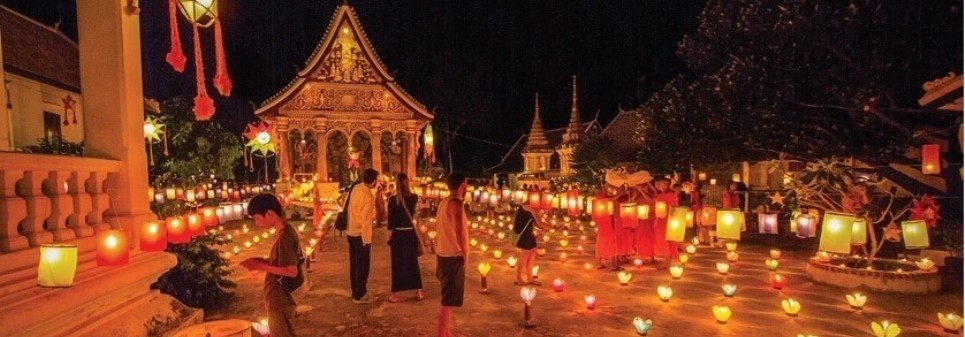
Luang Prabang today is lighten colorfully by thousand of candles at night to celebrate The Boat of Light Festival.
The Festival, original name is Lhai Heua Fai, celebrated at the night of the End of Lent to mark the end of the monks’ three-month-fast and retreat during the rainy season. People gather to make small round containers, using banana leaves on a section of banana trunk, then put flower, incense stick, candles, betel nuts and other condiments for chewing, food money on the top of the container. At dawn, donation and offerings are made at the temples. Prayers are chanted by the monks, and at dusk candlelight procession wind around the temples. The “flower boat”, lighted with candles, will be sent floating away at the bank of Mekong or Nam Khan River along with praying and chanting from locals.
Lhai Heua Fai is also aimed at sending offerings to the dead. But most of all, it is a homage to the Lord Buddha.
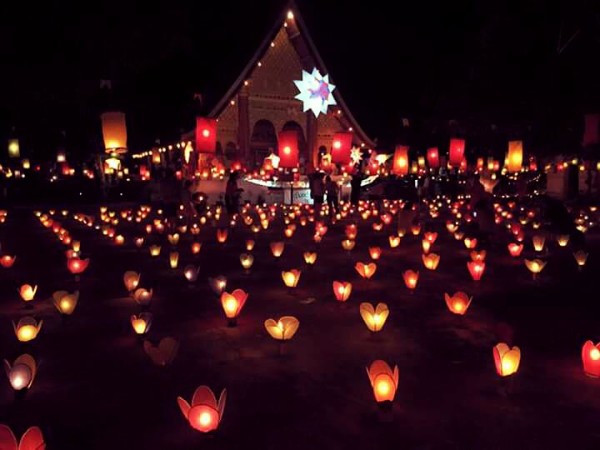
There are also a competition between villages and temples to celebrate this special occasion. Temples and villages build their boats of light, from bamboo and paper, which are much bigger and more elaborately decorated, take paradise at night, along the Old Quarter road, before being selected to be the winner and sent to the bank of Mekong River, in front of Wat Xieng Thong’s pier.
Tomorrow (28 October 15), there will be boat racing Festival in Vientiane and Sayabouly province.

New railway project links Laos and China
Construction of a railway linking Laos and China, destined to stretch to ASEAN neighbours, Thailand, Malaysia and Singapore, should begin in November this year.
Vientiane Times quoted Minister of Public Works and Transport Bounchanh saying if things go as planned construction of the railway could start as early as November and take about five years to complete.
The project will connect the Lao capital of Vientiane with the Chinese border, near Luang Namtha, at a distance of 417 km. It will pass through Luang Prabang and through mountain ranges providing the Chinese construction teams with a formidable challenge.
The planned single 1.435-metre standard-gauge track, covering a distance of 417 km, will have 31 stations, including five main stations. It will require 76 tunnels of an overall distance of 195 km and 154 bridges covering a distance of 67.15 km.
Passenger trains will travel at a maximum speed of 160 km per hour and freight trains at 120 km per hour. The main use of the railway line will be to transport cargo between China, through Laos to connect with an upgraded rail line to Thailand’s eastern seaboard ports on the Gulf of Thailand. It will be ultimately extended to Malaysia and Singapore.
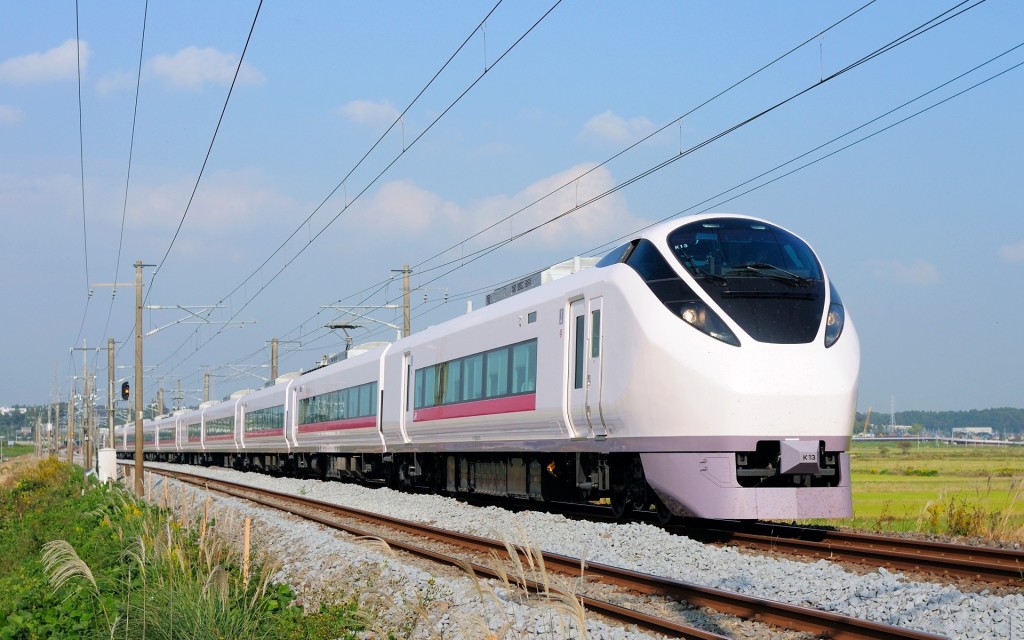
The first phase in Laos was initially estimated to cost USD6.8 billion.
The two governments agreed to directly contribute 40% of the total investment for the project with the Lao government responsible for 30%, amounting to USD840 million and the Chinese government contributing 70%.
In the event the Lao government struggles to make its contribution of USD840 million, the Chinese side has agreed to provide a low-interest loan of USD500 million to Laos while the rest will have to be sourced by Laos, the report said.
Revenue to be generated from a bauxite mine and three potash mines in Laos are to be used to secure the Chinese loan. The 20-year loan period will carry an annual interest rate of 3% with an interest-only period, i.e. no repayment of principle, for the first five years.
The remaining 60% will come from private investors.
The Lao National Assembly approved the project in 2012 as part of plans to turn Laos from a landlocked country into a land-linked nation.
The planned rail project will be part of a regional rail link known as the Kunming-Singapore rail line covering a distance of 3,000 km.
The high-speed line will link Kunming, the capital of Yunnan province all the way to Singapore, passing through Laos, Thailand and Malaysia.
Thailand Prime Minister Prayut Chan-o-cha confirmed earlier that the government is speeding up implementation of Thai-Chinese joint venture railway projects with assurance that construction of the first dual-track rail project linking Nong Khai province in the Northeast and Rayong province in the East will begin in October.
The two countries signed a memorandum of understanding on the project in December last year.
The planned China-Thailand Railway is 867-km long, with an agreed operational top speed of 180 km per hour, down from the previous 250 km per hour.
Picture: cdn.wonderfulengineering

Destination highlight: Royal Palace and Ramayana show
Royal Palace was built in 1904 during the French colonial era for King Sisavang Vong and his family. This famous place is used to be home of Royal Family, with mixed architecture of traditional Lao motifs and French Beaux Arts styles. Nowadays, it was converted into a National Museum, which displays a lovely collection of the artefacts reflecting the richness of Lao culture dating from the days of the early kings right through to the last sovereign.
* Opening hours: 08:00am till 16:00pm daily
* Special activities: Ramayana show starts at 06.00 pm during high season (October to March) and 06.30 pm the rest of the year (March to September).
 The performance of the Phralak Phralam lasts approximately two hours and is held in the theatre of the former Royal Palace of Luang Prabang, which was formerly used as the royal ballroom and reception room. The room can accommodate a great number of people, and in the evening it is specially lighted to great effect. Guests can hear cicadas, crickets and frogs in the palace gardens which echo the sounds of the orchestra. The music accompanies and illustrates the nine dances of the Phralak Phralam. Each evening, two of the nine dances are performed and totality of the performances invoke the ancient royal kingdom of Lane Xang.

– Shows are held every Monday, Wednesday, Friday and Saturday
– The day of representation can change anytime
– It is forbidden to take photos during the performance so as not to interrupt the dancers. Members of the audience are welcome to take photos at the end of the performance.
—————————————————————
Visit Laos with Asia Reveal Tours – info@asiarevealtour.com; www.asiarevealtour.com