All posts by Asia Reveal Tour Laos

Huaphanh at a glance

Located: in the northern part of Laos (Northern Provinces)
Total area: 16,500 square kilometers
Population: 317,946
08 Districts: Xam Neua, Xiengkhor, Viengthong, Vieng Xay, Huameuang, Xam Tai, Sopbao & Add
Capital of the province: Xam Neua
Houaphanh is enclosed by Vietnam to the north, south-east, Xieng Khouang to the south-west and Luang Prabang to the west. A mountainous province in the northeastern Laos. While in the past it was difficult to navigate the province’s dramatic terrain, road upgrades now make travel easier and more enjoyable. Scenery along the roads into Houaphanh is stunning and you may even witness the Houaphanh Province is the birthplace of the Lao People’s Democratic Republic. As yet, it is one of the least visited provinces in the country and offers an authentic and varied experience for visitors. Enjoy a pristine natural environment of mountains, rivers, waterfalls and forests, visit the caves at Vieng Xay for a unique insight into the history of the country, and discover the mysterious standing stones of Hintang Archaeological Park which date back more than 2000 year.
Houaphanh has many unique and beautiful natural attractions. The provincial capital, Xam Neua, is a quiet and rustic city on the Xam River. Here you will enjoy markets trading produce from China and Vietnam and a variety of handicrafts produce by the Hmong, Tai Dam, Tai Daeng and Tai Lue ethnic groups. Also of interest in Xam Neua is Wat Phoxainaram, home to an impressive bronze Buddha possibly dating back to 1565 and an interesting serries of murals depicting the life of Buddha and scenes from Lao History.
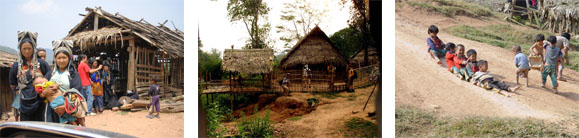
Huaphanh
Vieng Xay, located northeast of the capital, boasts over 100 limestone caves, 10 of which have immense national and historical significance as the hidden headquarters of the Neo Lao Hak Sad from 1961-1975. In the southeast of Houaphanh is the Nam Xam National Protected Area (NPA). which is thought to provide habitat for wild elephant, various gibbons, gaur, banteng, tiger, clouded leopard, Asiatic black bear and Malayan sun bear. South of Xam Neua located Tat Saloei, a beautiful waterfall best viewed after the raiy season. Nam Et-Phou Loei is the largest NPA in Laos situated in the northwest of Houaphanh. It is best known for harboring one of the most important tiger populations remaining in indochina. Its outstanding biodiversity includes over 30 species of large mammals and 300 species of birds.
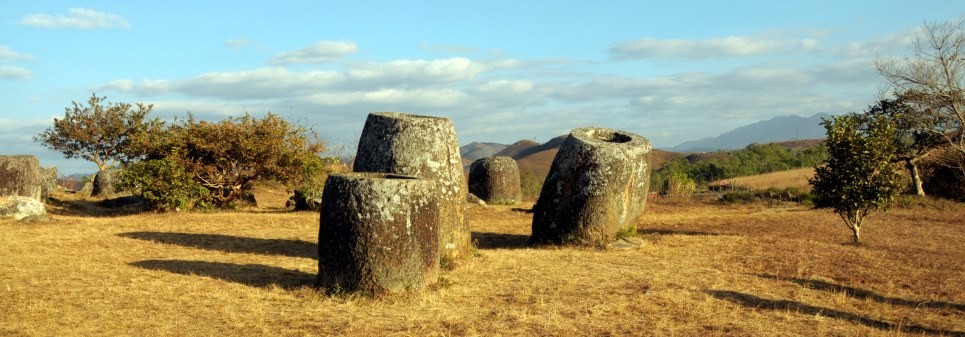
Not as well known, but equally as mysterious as the Plain of Jars are the ancient pillars known as Hin Tang, a collection of upright, rough stones about 2m high, some of which have tunnel-like caverns beneath them. Archaeological investigations suggest that the site is associated with funerary practices however visitors to the ancient pillars are welcome to guess why this ancient site was built. Sao Hin Tang will be nominated as a World Heritage Site.
The best Tai Daeng woven textiles are produced in Houaphanh, At local markets you will find an interestig variety of cutlery, jewellery and other items fashioned from Cluster Bomb Units and war scrap that remains scattered throughout the countryside. Houaphanh Province boasts the usual variety of Lao noodles, fragrant sticky rice and local dishes. The most notable are a vegetable salad flavored with sesame called “soup phak” and chili paste known as “jaeow pa baum”.

Source: www.tourismlaos.org

Other provinces, see more at:

Sayabouly>>

Oudomxay>>

Bokeo>>

Phongsaly>>

Luang Nam Tha>>

Sayabuly at a glance

Located: in the nothwestern of Laos.
Total area: 16,389 square kilometers.
Population: 374,666.
11 Districts: Sayabouly, Khop, Hongsa, Ngeun, Xienghone, Phiang, Paklay, Kenethao, Saysathan, Botene and Thongmixay.
Capital of the province: Sayabouly.
Sayabouly Province is situated in the northwest of Laos, sharing borders with Vientiane Province and Luang Prabang Province in the east, and Thailand in the west. This mountainous province has several peaks with altitudes of more than 1.000 meters. Travel to this rugged landscape will reveal many beautiful mountains and flower gardens. The local people earn their living via agricultural products such as growing rice, cucumbers, cotton, cabbage, beans and sugarcane. Elephant continue to be used for loading and transporting heavy items. The province is also an important agricultural producer of rice, cotton, peanuts, sesame, maize and oranges. The Malabri, one of the last remaining hunter-gatherer groups in Southeast Asia inhabit the forests in the province’s western region. Other ethnic groups located in the province include the Khmu, Tai Dam, Tai Lue, Htin, Phai, Kri, and Akha. In Muang Ngeun District are ethnic Tai Lue villages, which still build traditional houses constructed with characteristic high-sloping roofs. Muang Ngeun’s old Tai Lue style temples include Wat Ban Khon with its unique natural fiber murals and decorations, and Wat Si Boun Yeun with its charming view of the town.

Sayabuly
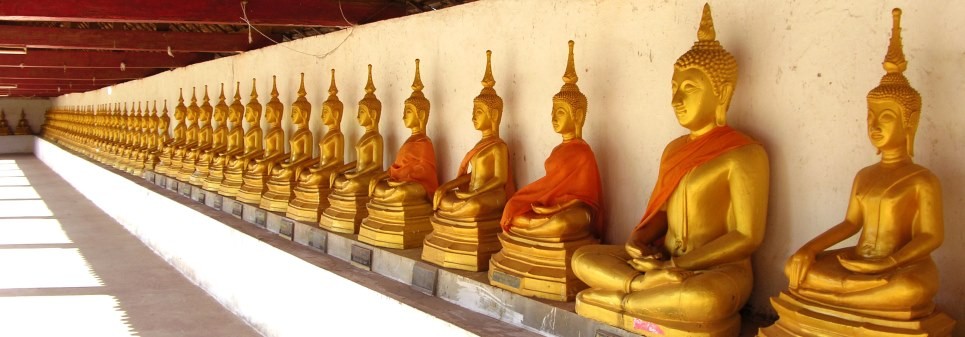
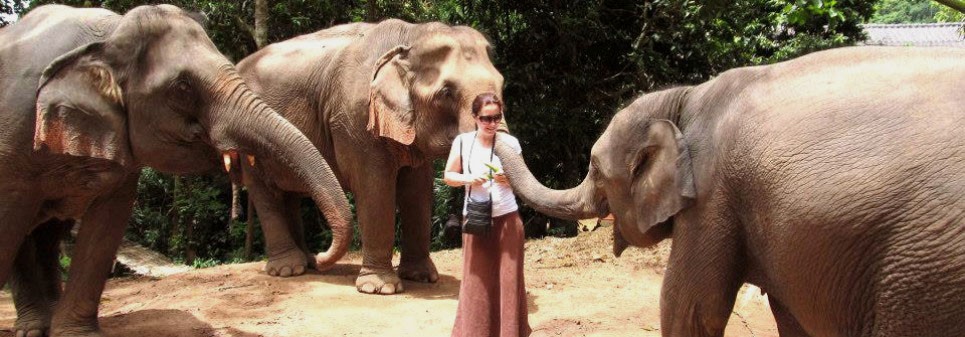
Sayabouly has the largest number of elephants in Laos, which are commonly used to carry heavy items to and from fields and forest. In Hongsa District, elephant riding tours can be arranged and a visit to the Lao Elephant Conservation Center is a nice half-day trip. Also of interest in Hongsa is Wat Simoungkhoun with its astonishing collection of Buddha images and the old city walls of an ancient settlement whose history is shrouded in mystery. In Sayabouly town, located on the banks of the Nam Houng River, and a beautiful backdrop of green fields and the Pha Xang Mountain range. are Wat Sibounheuang with its ancient foundations dating back to the 16th century or perhaps earlier; Wat Siphandon with its unique diamond-shaped stupa and Wat Sisavangvong. Between Vientiane and Sayabouly town is Paklay, a small town located on the Mekong River banks with French colonial buildings, traditional Lao-style wooden houses.
The 1,912 km2 Nam Phui National Protected Area has steep and rugged ridges composed mostly of Mesozoic sandstones and shales with summits along the Thai border that reach 1790 m. The NPA has a substantial wild elephant population, with an estimated 350 animals. Gibbon, gaur, tiger, dhole, serow, silvered langur, Asiatic black bear, and possibly even Sumatran rhinos are some of the other large animals found in the area. Don’t miss the scenic waterfalls Nam Tok Na Kha, Nam Tok Ban Kum, and Tad Ham Waterfall found in the southern part of the province.
The art of Tai Lue weaving is still practiced in many Tai Lue villages throughout the province. Villages can be visited to learn about the production process and to purchase textiles. Many villages also work in cotton, organically grown in the province.

Source: www.tourismlaos.org

Other provinces, see more at:

Huaphanh>>

Oudomxay>>

Bokeo>>

Phongsaly>>

Luang Nam Tha>>

Highlights in Vientiane

Highlight Tours
Heritage Tours
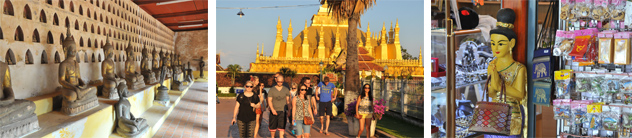
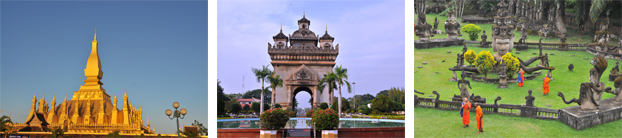
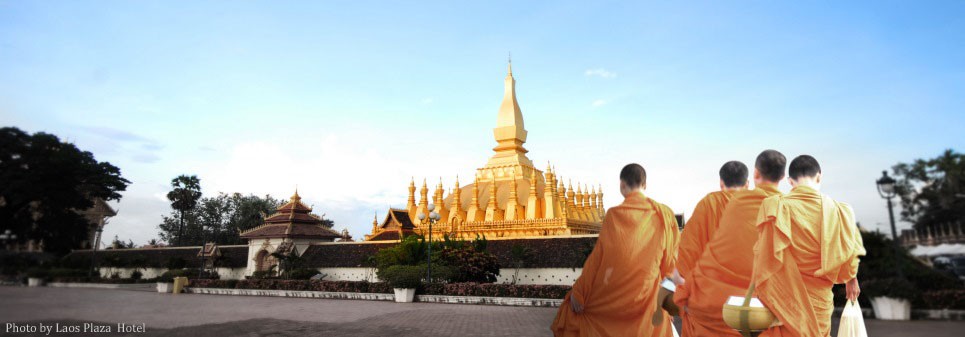
Visit Wat Sisaket, the oldest temple with thousands of miniature Buddha statues. Discover the former royal temple of Wat Prakeo, which previously housed the famous Emerald Buddha Image. Take in the stunning of Lao’s national precious heritage, the famous and sacred structure of That Luang Stupa, or explore the imposing Patuxay Monument, which is well known as Vientiane’s own Arc de Triumph.

Textiles Tours
With the Weaving class, visitors will learn the process of silk weaving, from how to dye textiles, to pattern making, on through to the weaving process itself. The lesson also includes orientation regarding history, background and weaving styles. Lessons are conducted at either the Phaeng Mai Gallery or Houey Hong Vocational Textile Training Centre.

Vientiane descript 2

Golf Tours
Take a visit to Dansavanh Golf Club outside of Vientiane city. With 18 and 36 holes courses and amazing landscape, the modern – full equipped facilities Golf Center will make your trip be more unforgettable.

Nam Ngum River Experience
This trip offers a close-to-nature experience. Start with a local long-tail boat ride along the Nam Ngum River, some 50km from the centre of Vientiane. Visit the stunning Swedish-operated lodge. Trek through the forest with a knowledgeable guide who gives insights and information about the tropical forest eco-system and various wildlife inhabitants of the forest.

Main sight-seeings in Vientiane
Pha That Luang
Pha That Luang (The Great Stupa or Sacred Reliquary) is the most significant Laotian religious and national monument. It is situated on a hill about three miles north east of the center of Vientiane. The site was built as a place for people to worship and pray to idol, according to the book That Luang Viengchanh, recompiled by Kavi in 1999. The structure was renovated during the reign of King Saysetthathirath in the 16th century when the original site was covered with a larger stupa. From then on the monument took the name That Luang, or Grand Stupa.

Buddha Park
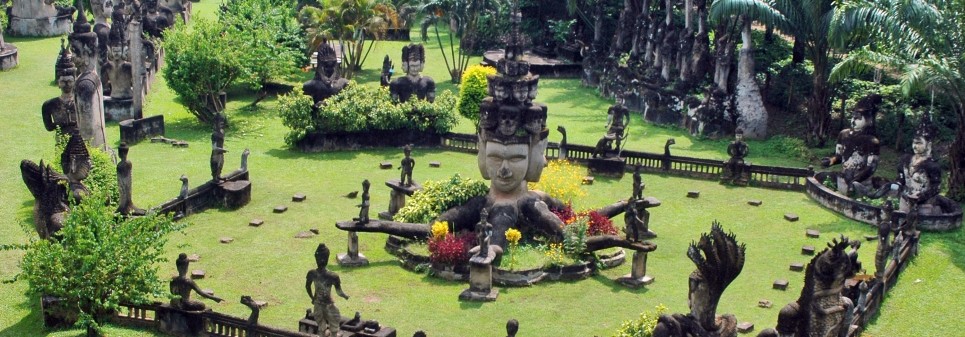
24km south of Vientiane, Buddha Park is in a field near the Mekong River. As the name suggests, the park is littered with religious sculptures and was built in 1958 by the philosopher Bunleua Sulilat who famously combined Buddhist and Hindu philosophy, mythology and iconography. Beyond these the roof area has a superb panoramic view of the surrounding park and river.

Haw Prakeo
This is an elegant, and majestic structure of King Setthathirat’s former royal temple, which housed the magical Emerald Buddha (pha kaew) after it was taken from Lanna (Chiang Mai). The present structure is a 1942 reconstruction of dubious provenance. The temple no longer operates and the interior has been turned into a small jumbled museum housing Buddha images; look out for the beautiful tall, lithe, long-armed Buddha in the hands-down “calling for rain” pose.

Vientiane descript

Wat Sisaket
Wat Si Saket which locates in the corner of Thanon Lane Xang and Thanon Setthathirat, is the oldest temple with thousands of miniature Buddha statues. Built in 1818 by Chao Anou in the Bangkok style, it features over 6,840 remarkable Buddha images, made of wood, stone, silver and bronze. In the center of the courtyard, there is a five-tier-roofed sim (ordination hall) housing yet more Buddha niches and beautiful but fading murals of the Buddha’s past lives.

Local cuisine
Laos Sticky Rice
Rice is the staple carbohydrate. The standard kind is sticky rice, eaten by hand from small baskets called tip khao. Using your right hand, pinch off a bit, roll into a ball, dip and munch away.

Tam Maak Hung
Another Lao invention is tam maak hung, the spicy green papaya salad known as som tam in Thailand, but which the Lao like to dress with fermented crab and a chunky, intense fish sauce called pa daek, resulting in a stronger flavor than the milder, sweeter Thai style.

Sindad
This is the typical of Grill & hot pot in Laos style. With a special pot – half grill, half boiled and a laid of tantalizing cuts of well-marinated tenderloin, ribs, pork, shrimp and fresh seafood around, the waiter will fire up the grill and leave you to cook selections to your liking. Meanwhile, they will leave a steaming hotpot to simmer its delights. You can enjoy with a choice of Beer Laos or wine on every restaurant near Mekong River Bank.

More Blogs here>>

Highlights in Luang Prabang

Highlight Activities
Morning Alms Givings
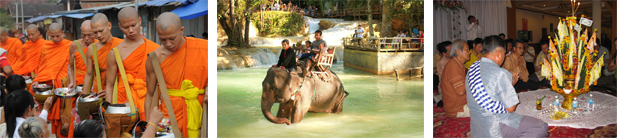
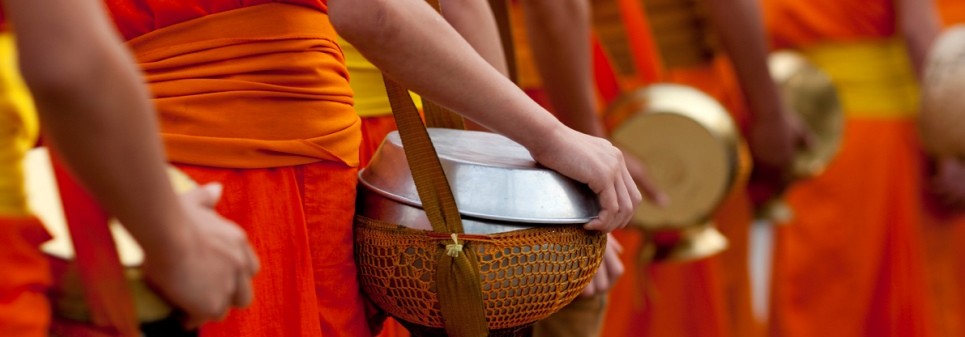
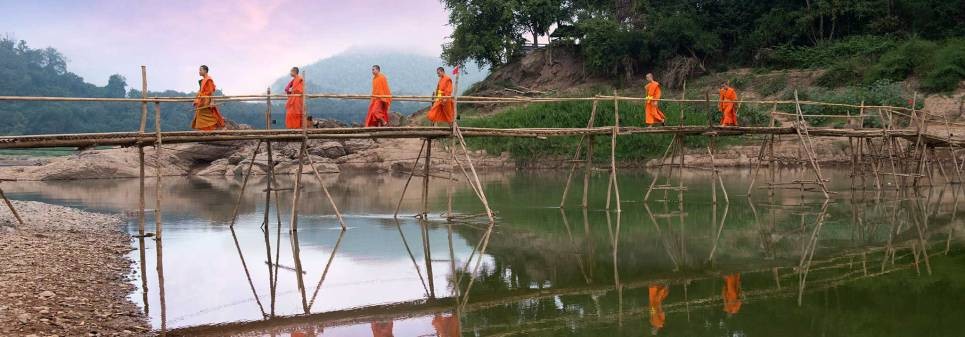
Alms Giving is held at 4 or 5am daily morning. When attending this special ceremony, everyone brings food, which is prepared and laid carefully on a silver tray, or in rattan basket, sits on the roadside and wait for silent lines of saffron-clad monks walk down the streets of Luang Prabang to collect alms. The ritual is done in silence; the monks walk in meditation, and the almsgivers reciprocate with respect by not disturbing the monk’s meditative peace, even when they pass already.

Elephant Riding Tours
Take a short driving outside the city, guests will have a chance to visit Elephant Camp near River bank and learn how to control, ride an Asian Elephant. Other activities can be combine such as trekking, visit Waterfall, kayaking, or some mahout course with Camp’s staff.

Baci ceremony 
Baci, an authentic ceremony of well wishing, dating back to the times before Buddhism, was widely accepted as the main religion of Lao people. During the ceremony, white cotton threads representing 32 benevolent spirits are symbolically tied around the wrist of the attendants. Locals believe that these Khouan work to protect the people from illness, sadness and the general malaise of everyday, modern life. The blessing is overseen by a Mo Phon (like a Master of Ceremonies) who ensures the Khouan are correctly wound and aligned. After the ceremony, guests are invited to enjoy a special Lao meal comprising many renowned local dishes.

Luang Prabang highlight descript

Cooking Classes
A Lao cooking class teaches everything from selecting the best market produce to identifying the right ingredients, how to prepare sticky rice to perfection, and how to cook Lao dishes on an open fire. Guests can customize dishes to taste, making them authentically local or tailored for easy preparation at home. Of course, the dishes cooked are enjoyed at the end of the lesson.

Textiles Tours
This special tours takes an opportunity for customer to visits some of most famous gallery & textiles centers in Luang Prabang: TACE, Ok Pop Tok, Caruso, Ma Tei Sai…and learn about Laos Traditional Handicraft Culture. Asia Reveal Tours offer package half day, full day, combination day with private and join-in group to satisfy whatever client wants.

Main sight-seeings in Luang Prabang
Wat Xieng Thong
Wat Xieng Thong is one of the most important temples in the country of Laos. The word “Wat” in Lao means temple, in this case, the Temple of the Golden City. The temple laid on the bank of Nam Khan River, with its roofs sweeping low to the ground, which represents classical Laotian architecture.

Royal Palace
Royal Palace (other name: National Museum) displays a lovely collection of the artefacts reflecting the richness of Lao culture dating from the days of the early kings right through to the last sovereign.

Phousi Mountain
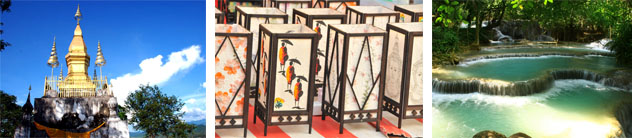
Phousi is the main hill in the city where tourists can observe a panorama view of whole area. The 328 steps lead to a top of Mount Phousi with an ancient, sacred gilded stupa and it’s time to relax with a great view of Mekong River.

Luang Prabang highlight descript 2

Night Market
This busy and colourful Market opens daily from 17h30 pm to 22h pm (except festival days) and it is the ideal place for tourists to find a range of lovely textiles selection made by the local and the hilltribe people surrounding Luang Prabang.

Kuang Si Waterfall
Around 30km south of Luang Prabang (about one hour driving), the Khuang Si waterfall is an ideal place for hiking, swimming and soaking up with the natural beauty of the surrounds. The soaring limestone surfaces and cascading drops they make for some memorable views and fun activities.

Pak Ou caves
The Pak Ou caves – Tham Ting – are among the most revered holy sites in Laos. A river trip on the Mekong to this famous attraction near Luang Prabang offers a pleasant boat ride, combining a visit to the culturally important caves with a day out in superb riverside landscape and local villages.

Handicraft Villages
Witness the secrets of Lao textile and weaving practices by spending an afternoon to visit some local villages such as: Ban Xang Hai – local wine making, Ban Phanom – hand weaving, Ban Xang lek – Saa paper making, Silk weaving and some of H’mong Village famous for bamboo weaving.

Local cuisine
Oh Lam
Oh lam is a stew mainly made from vegetables: beans, eggplants, gourds, black mushrooms, then seasoned with lemongrass, chili, and coriander and finally thickened with sticky rice. Ho or Oh is loosely translated as “to put in”, which implies that this stew is a hodge podge of whatever ingredients are on hand. But the key ingredient is sa kan, a bitter root herb.

Laap
Probably the best-known Lao dish, laap is a chopped meat “salad” made of pork, chicken, beef, duck or fish, dressed with lime juice, garlic, crushed, roasted rice and herbs and served at room temperature. Another flavor in laap is the rice grains that are roasted then crushed to a powde (kao kua). Not only does it add a fragrant nuttiness to the dish, it also serves to absorb some of the moisture.

Mok Pa
This special dish is very famous in Luang Prabang, which contains sticky rice, lemon grass, onion, dill, basil leaves, chili and garlic mixed with chicken or fish. Mixed meat and ingredients together and wrapped with banana leave before steam.

More Blogs here>>

The Elephant Festival Sayabuly

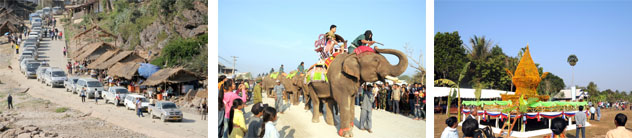
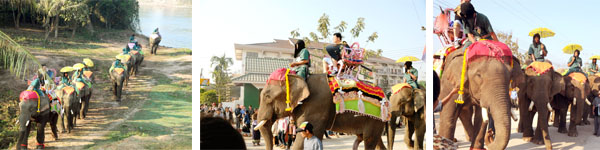
The Asian elephant has its day, actually two, in mid-February when Laos turns its eyes to Sayabouly Province and the Elephant Festival. Launched in 2007, the annual fete draws more than 80.0000 elephant fans to the ceremonies, processions, and performances to pay tribute to the national symbol of “The Land of Million Elephants”.

Home to the country’s largest pachyderm population, Sayabouly Province is the natural choice to host this growing event that also aims to raise awareness about the need to protect the endangered Asian elephant, which has played such a vital role in Lao people’s livelihoods, culture and heritage.

Elephant Festival descript

After an opening ceremony, a procession of elephants enters the host village through a bamboo arch. The elephants bathe and are blessed by monks, with participants making merit in a baci ceremony, before with the election of the “Elephant of the Year”. Then the entertainment begins: pachyderm performances, musical concerts, outdoor films, dance shows, and fireworks displays in a carnival atmosphere that includes elephant rides and a “Fun Fair”. After the second day’s procession and religious ceremony, mahouts round up their massive mammals for a day of elephant entertainment and visitor education capped with the crowning of the elephant of the Year. For an even more authentic experience, visitors can book a village home-stay.

Source: tourismlao.org

More Blogs here>>

Wat Phou Festival 2015

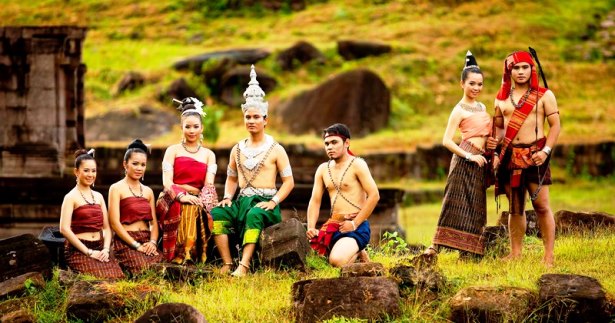
The annual Vat Phou Festival takes place in February each year, coinciding with the Buddhist festival of Makha Busa and bringing believers from near and far to attend a ceremony and take part in festivities. The Vat Phou Festival 2015 will take place on 03 February 2015.

Since the ancient Khmer ruins of Vat Phou were listed as a World Heritage Site by UNESCO, government authorities have been working hard to promote tourism in Champasak and the surrounding area. The Vat Phou Festival is also important for helping Lao people to understand the cultural significance and historical importance of the magnificent site.

Photos: Adul Tanthakosai

Alongside the sound and light show, the Vat Phou Festival will also include singing and dance performances by performers from Cambodia, Thailand and Vietnam as well as Laos. Most of the performers are local people from Champasak who have trained for the performance alongside their foreign counterparts. There will also be a large market for facilitating the sale of domestic products and handicrafts.

Vat Phou is open daily from 08:00 to 1800 and admission is around 30,000 kip. The Vat Phou complex is about 8 km from the main Champasak town, south of Pakse. For more information on ideas for a trip to the south of Laos, please contact us: info@asiarevealtour.com

Based on: Yingchockchai Group, Vientiane Mai
Photos: Adul Tanthakosai

More Blogs here>>