All posts by Asia Reveal Tour Laos

That Luang Festival 2016

Upcoming event: That Luang Festival

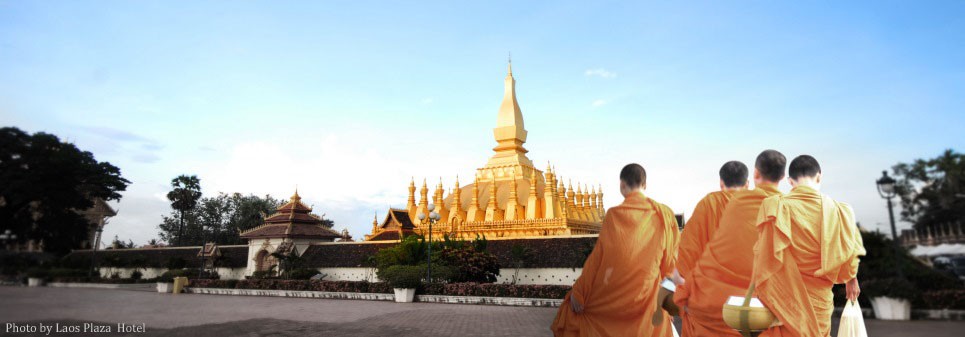
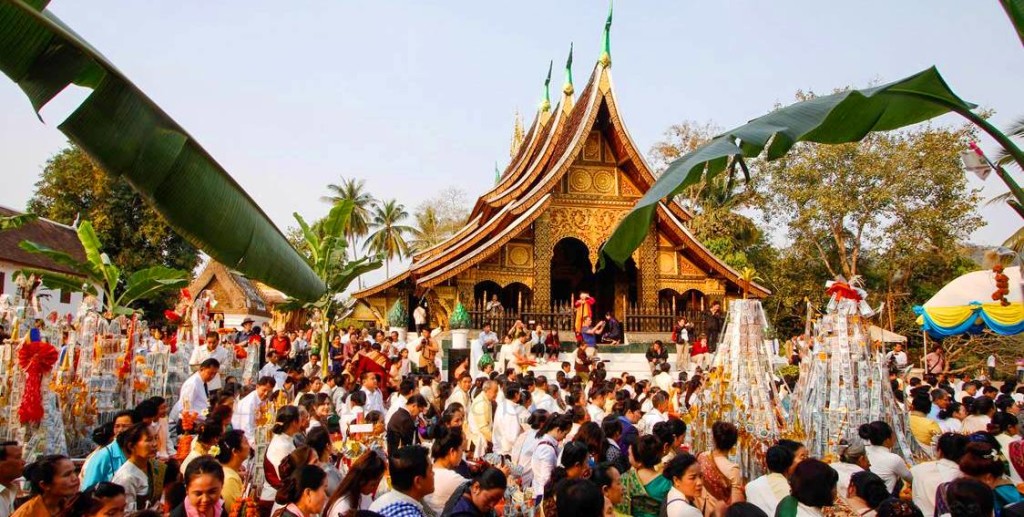
That Luang, The Grand Stupa, in Vientiane Capital is sanctuary to the Lord’s hair and bosom bone. It was built over an ancient stupa  in the 16th century, by King Setthathirath when he moved the capital of the Lane Xang Kingdom from Luang Prabang to Vientiane. It has since become the symbol of Laos and is profoundly revered by all Lao People.

The That Luang religious festival lasts three days. This year, the festival and Trade Fair will be held from 07 – 14th November 2016. It starts with the wax castle procession at Wat Si Meuang  and end with a procession around the Stupa. Thousands of monks and ten of thousands of pilgrims come from all over the country and even from Thailand, Cambodia and Vietnam to attend the festival.
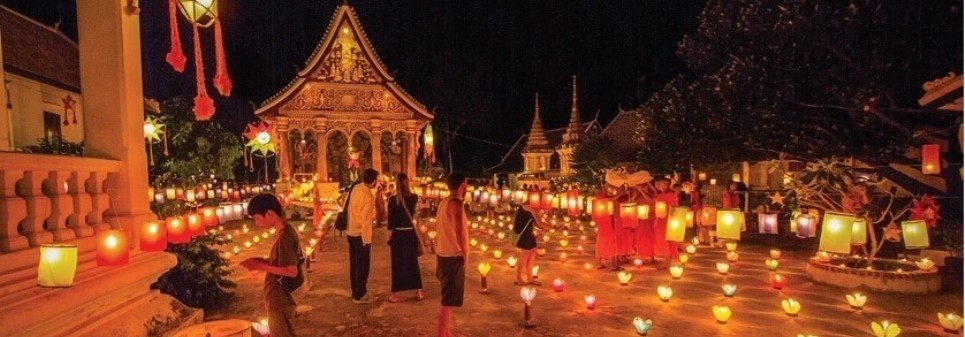
One week before the religious festival, a huge international trade fair features goods and exhibitions from all over the world. The religious festival starts with the procession at Wat Si Meuang to worship the City’s foundation pillar and pay homage to Nya Mae Si Meuang or Lady Si Meuang, a pregnant woman, inspired by the divinities, jumped into the hold in which the city pillar was about to be planted and was thus crushed to death. She has become, since, the protector of Vientiane and inhabitants devote a special cult to her. The procession gather Phasat Pheung (wax castles) of banana trunks and decorated with flowers made of wax. The Phasat, which re commissioned by families or villages in and procession around Vientiane, are carried three times around the Sin and then offered to the temple. This procession is very spontaneous and colourful and ends with fireworks, which symbolizes an offering of flowers of light to Lord Buddha.

The next day, at 01:00PM, a bigger and more elaborate procession brings more wax castles through the Eastern Gate of the That Luang cloister. The wax castles are carried three times around the Grand Stupa and offered to the shrine.
On the last day of the festival, as early as 05:00AM, thousands of devotees gather in the cloister and around it, on the esplanade for the Takbat, the morning offering to the monks. After the ceremony, each family gather at stalls to eat Khao Poun, the national rice noodle soup and Tom Kai, chicken soup.

Early in the afternoon, there is the ritual game of Tee Khee, a polo game traditionally played in the Kingdom of Vientiane and believed to be exported to Burma and later to England. In the past, the game was between a team of officials and a team of villagers.

Top 5 beautiful waterfalls in Vientiane

At present, Vientiane residents have a choice of waterfalls to visit, where a happy Saturday or Sunday can be spent enjoying a lazy picnic and playing in the refreshing water. Most of the waterfalls are surrounded by thick vegetation and visitors can delight in the clean air and the sound of birdsong against the backdrop of cascading water.
Most waterfalls are open daily from 8:00 am to 5:00pm and there is a small charge for each visitor and for vehicles. It’s also advisable to bring some money to rent a hut and some mats.
We have listed below some of the most attractive and accessible waterfalls in Vientiane, and you should definitely try to get to at least one of them.
1. Tad Moun waterfall
This waterfall is located in Sikhottabong district and is closest to the city centre. It has been developed by a local investor and consists of several areas: Tad Moun 1 and 2, Tad Palay, Tad Vangnong 1 and 2, and Tad Vangnampheuak. Leaving downtown Vientiane, head for the Km 10 marker at Nongteng village on Road No. 13 North. You will see a sign on the right hand side to Tad Moun waterfall, where you turn left onto a concrete road and then drive a further 7 to 10 kilometres to reach the waterfalls. Each of them is signposted along the road. They are all close to each other and you can choose your favourite spot.
2. HinKhanna waterfall
This waterfall is located in Naxaithong district and can be reached by driving along Road No. 13 North to Km 15 where you will see a sign to the waterfall pointing to the left. Turn left and drive for another 10km to reach the waterfall. There are a lot of trees here and it’s a good place to have a picnic with your family or friends.
3. Tad Xon waterfall
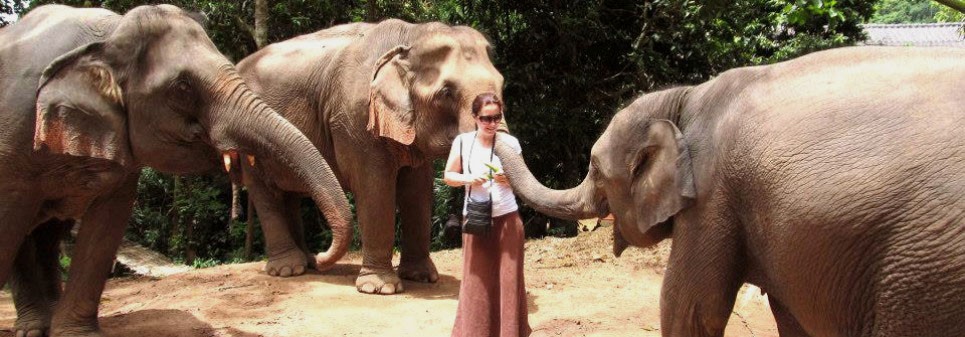
Tad Xon is located in Naxon village, Naxaithong district, and has a large channel that directs the cascade of water pouring down the rocks from higher ground. To get there, take Road No. 13 North to Huakhua village – a distance of about 20 km. You will see a sign pointing left onto an asphalt road, which you should follow for another 10km. This area has many big trees and is a very good place to relax in a modern hut or take an elephant ride. Elephant rides cost 50,000 kip for foreign adults and 30,000 kip for foreign children. Lao nationals pay 30,000 kip per adult and 20,000 kip for children.
4. Nam Xuang reservoir
This reservoir is located in Sivilay village, Naxaithong district. Take Road No. 13 North to the 38 Km marker where you turn left onto an asphalt road. Continue for a further 2km to get to the reservoir. Here, the water flows through a channel formed by rocks and is a great spot to cool off.
5. Tad Vangluang waterfall
Tad Vangluang waterfall is located in the Vernkabao area of Pakngum district. It opened to the public last year and is currently very popular, attracting at least 1,000 people at weekends. The entry fee is very reasonable at 20,000 kip per pick-up truck and 5,000 kip per motorbike. Huts are available for rent at 50,000 kip per hut, and you can also rent inner tubes, charcoal stoves and mats for 20,000 kip each.
To reach this waterfall from the centre of Vientiane, drive along Road No. 13 South for about 60km to Pakngum district and 2km after crossing the Banhaibridge you will see a big sign advertising the waterfall, where you turn left onto a dirt road. Pakgnum district is famous for its annual Naga fireball festival when the legendary serpent that inhabits the Mekong releases fireballs into the night sky at the end of Buddhist Lent in October.
According to a tourism statistics report for 2015 compiled by the Tourism Development Department of the Ministry of Information, Culture and Tourism, there are 51 officially designated tourist sites in Vientiane. Of these, 25 are natural attractions, 17 are places of cultural interest, and nine have historical importance.

The Garavek Theater Luang Prabang

Luang Prabang province, in northern Laos, offers many things to do but the traditional storytelling at Garavek Theatre is one of the more interesting options.
Luang Prabang is a famous tourist destination in Laos, attracting thousands of visitors every month. Some people go there to be immersed in the traditions of Lao culture and to hopefully learn a little bit about Lao history. The theater was opened with these tourists in mind.

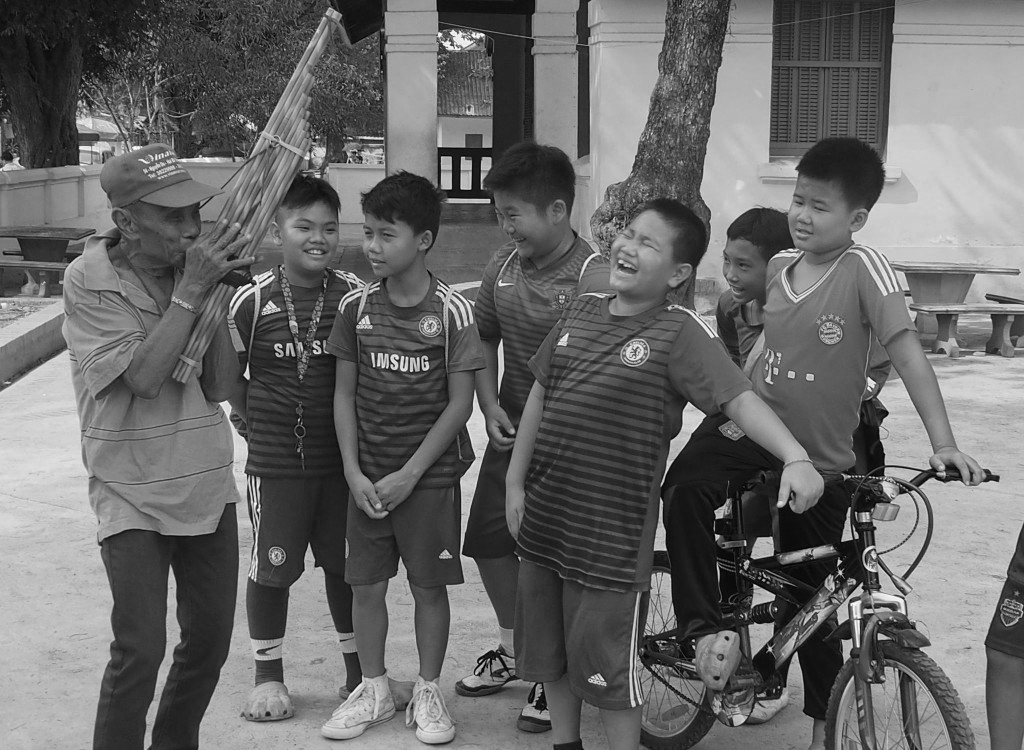
The Garavek Theatre is a small venue under the direction of Mr Nicholas Gibson. It opened in 2014 after moving from Vientiane and is now located in Phonheuang village in the provincial capital. The stories are related in English and accompanied by the khaen, a traditional reed instrument. Tickets for a performance sell for 50,000 kip.
OLYMPUS DIGITAL CAMERA

Photo: The Garavek

The people who work at the theatre have always been fascinated by folktales and legends, particularly stories that recount the origins of social groups and also the origins of natural features and other everyday things. Luang Prabang has a tonne of these stories. The stories are about the rivers and mountains; how they came to be there and where the names come from.

There are currently only six people employed at the theatre: two storytellers, Siphai and Thongsamay, a khaen player, and Keo-udon and Noy, who sell tickets and serve drinks. Then there is Nicholas, the director of the theatre, who also works the lights during the show.

There are eight stories the theatre currently performs, about the khaen, Fa Ngum, Xieng Mieng, the Mekong River, the Khan River, Ai Tongkuang, Phou Si hill, and Phou Thao-Phou Nang. They all are very entertaining and are worth knowing about.

The Khaen story describes how the instrument got its name. The story details a hunter and a widow who went hunting deer in the forest, stumbling across the beautiful sound of the Garavek bird, a magical bird. The widow was so enchanted with the sound that when she returned home she tried to make an instrument that could mimic the bird. She was finally successful using small pieces of bamboo, which made a beautiful sound. When the king heard about this instrument, he ordered her to his court and asked her to play it. Finally, he said to the woman, “Kenglai, theua ni khaen dae”, which means “Very Good, this time was better”. The word “khaen” means better, which is where the name of this instrument comes from. This word is local dialect in Luang Prabang.

Fa Ngum is the history of the famous Lao king who was born with 33 teeth. Thought to bring bad luck to the kingdom he deport the Khmer kingdom in Cambodia where he was cared for as a son of the Khmer king. At the age of 37, he triumphantly returned home to Luang Prabang to create the Kingdom of Lane Xang and bring Buddhism with him in the process.

Xieng Mieng involves two humorous stories: “Ma Konkai” or “Came before the Rooster” and “Tua Phaya Long Nong” or “Tricking the King into the Pond”.

The Mekong story involves two Nagas or snake deities that were fighting with each other over some porcupine meat. The fight was eventually stopped by the gods who told them to stop fighting and made them dig two rivers as punishment. One of these rivers was the Nan in Lane Na kingdom which runs through Bangkok and the other was the Mekong im Lane Xang kingdom.

Nam Khan talks about the Khan River. This story has two brothers fighting over a pair of elephant’s tusks that their father left for them. After one brother brutally cuts the other in half he could only crawl, crawling into the river giving it its name. “Nam” means river and “khan” means to crawl.

Ai Tongkuang is the story of a giant snake that lived where the Nam Khan meets the Mekong. As he was con sidered a very dangerous snake and stopped boats from passing, he was killed. According to tradition, the big rock in the water where the two rivers meet is his body.

Phou Si relates the story of Queen Sida asking the monkey king, Hanouman, to bring her some mushrooms. As the mushrooms were called “monkey ear” mushrooms the Queen was afraid to ask for them by name. After bringing back many mushrooms from the hills of Sri Lanka that were rejected by the queen, Hanouman finally brings back an actual hilltop in the hope that the queen could find her mushrooms there. The hill has stood in front of the palace ever since. If you didn’t know, “phou” is the Lao word for hill or mountain, while “Si” comes from Queen Sida.

Phou Thao-Phou Nang, or 12 sisters, tells the story of a poor family – a father and 12 daughters. The 12 sisters were abandoned by their father and found by a lady giant who raised them. After finding the giant’s heart inside a jar, they decided to leave, moving to King Phoutthasen’s palace where they were married to the king.

When the giant heard about this, she transformed herself into a beautiful lady, married the king, and banished the sisters to a cave, ordering their eyes to be removed. Fortunately one sister escaped and gave birth to a boy, also known as Phoutthasen. This boy grew up and married the giant’s adopted daughter, Kuanghi.

One morning, Phoutthasen discovered the giant’s heart and his aunt’s eyes. He collected them up and set off to return them to his family. His wife Kuanghi, feeling abandoned, killed herself by the Nam Khan river. When Phoutthasen returned he found Kuanghi and he too died from a broken heart. Thevada, a god sprite, saw this and decided to keep the couple there forever.

So when looking across the Mekong, the legend says you will see two mountains that look like people lying on their backs. The mountain in front of you is calle d Phou Nang or “girl mountain” and the smaller one on the left is called Phou Thao or “boy mountain”.

People seem to enjoy the Xieng Mieng stories because they’re funny, while the story of Mount Si is also funny and informative.

“Unfortunately, there are not many Lao people coming to the theatre but sometimes we’ve had students come as part of school trips, and tour guides as part of their job. The plays are in English and geared to tourists, so it isn’t surprising,” Nicholas said.

“I’ve researched a number of the stories in books, and complemented this by speaking to people around town. I also worked closely with the Department of Tourism, Information and Culture,” he added.

Nicholas also said he would like to offer shows that explore stories about different ethnic groups, such as the Hmong or Khmu.

For now the stories vary from day to day and month to month in the 30-seat theatre. They can be seen in a one hour performance running from 6:30pm-7:30pm.

Luang Nam Tha attracts tourism

Luang Namtha has become a popular destination for foreign visitors over the past 10 years with its mix of historical, cultural and natural attractions in the north of the country, but local officials became concerned in recent years when tourist numbers plateaued.
New Zealand government supported about US$500,000 to improve infrastructures of Luang Nam Tha province to attract more tourists.
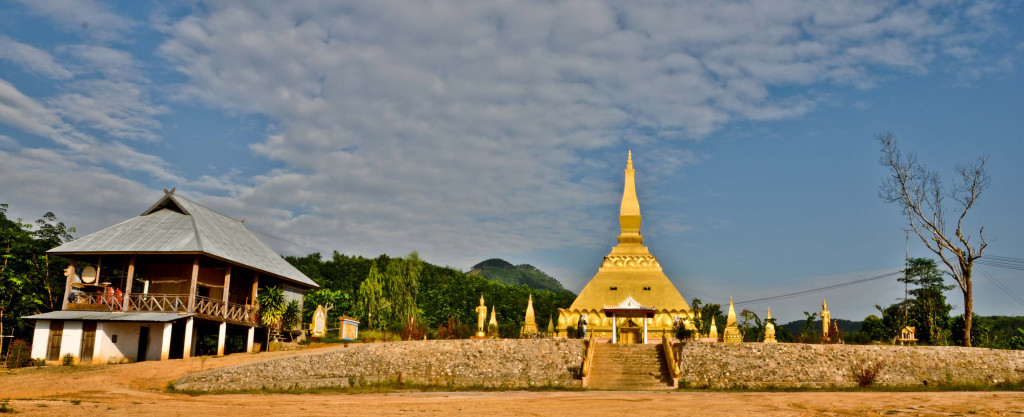
The improvements are now progressing and include the development of access roads, traffic signs, parking areas, street upgrades, cultural ethnic group houses, the Luang Namtha stupa surrounds, a centre to display the products of ethnic groups, an accommodation centre and other facilities.

Luang_Namtha_StupaImage source: Wikipedia

Luang Namtha is located in the north of Laos, covering an area of 145,289 square kilometres. It borders on China’s Yunnan province to the north, Oudomxay province to the east and southeast, Bokeo province to the southwest, and Shan State in Myanmar to the northwest.
The province contains the Nam Ha National Biodiversity Conservation Area and is one of the main sugarcane and rubber producing areas of Laos. There are about 20 temples in Muang Sing district, including Vat Sing Jai and Vat Namkeo. The anthropological Luang Namtha Museum is located in Luang Namtha district, the provincial capital.
Althought the Luang Nam Tha Tourism Department was set up 20 years ago, officials have tried their best to improve facilities and services so that visitors can sample the areas’s natural beauty, along with the lifestyles, culture and traditions of ethnic groups.

Luang Prabang tops Laos attraction

Luang Prabang tops Laos attraction
Around 83% of all travellers to Laos will visit Luang Prabang according to a survey by Lao PDR’s Tourism Development Department, which comes under under the Ministry of Information, Culture and Tourism.
It confirms what travellers have known for decades; Luang Prabang outshines even the capital Vientiane in recognition and popularity.
Vientiane Times quoted department officials who provided details of the survey that was part of a tourism report on trends in 2015 that included a survey of 2,800 overseas visitors on travel itineraries.
It was carried out at international checkpoints such as Wattay International Airport, the Lao-Thai Friendship Bridge linking Vientiane to Thailand’s Nong Khai province and in Luang Prabang and Champassak provinces.
83% of foreign tourists, who visit Laos, put the world heritage town of Luang Prabang at the top of their itinerary.
Luang Prabang will see an even more dramatic growth in popularity this year. Thai AirAsia was the first low-cost airline to break a virtual ban on budget airlines flying to Luang Prabang when it launched services 24 March from Bangkok.

Feb

Photo: Internet

SilkAir will launch three weekly flights to Vientiane and Luang Prabang from 31 October. Another LCC, HK Express, has also stated that it plans to a launch services to Luang Prabang by the end of 2016, providing Laos with its first nonstop link from Hong Kong to Luang Prabang.
According to the survey Vientiane was a close second in the popularity rankings, with 80% travellers spending time there. Champasak province with 58% was a distant third.
As more direct flights go into Luang Prabang, the role of Vientiane as an overland and air gateway could diminish, but it will offer more options for travellers to combine overland travel and enter and exit the country through different airports.
In fourth place, the popular tourist resort of Vang Vieng garnered 33% of the vote, while Bokeo and Khammuan provinces were in joint fifth place with 17%.
Of those surveyed, no one named Xaysomboun province as being somewhere they planned to visit.
The survey also revealed that 70% of visitors visited the country to see its temples and monuments. 66% of them said they were interested in scenic attractions, 48% said food was an interest, while 34% said they were keen to visit new destinations.
In addition, most visitors said they got information about Laos from the internet with 63% citing this source, while 30% said they read guidebooks, 23% said they got information from friends, and 16% said they contacted travel agencies or tour operators.

Boun Bang Fai – Rocket Festival

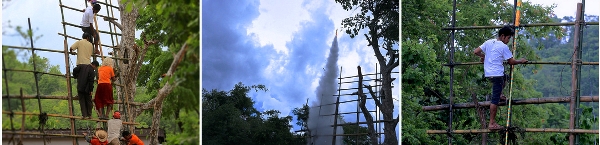
The Boun Bang Fai or Rocket Festival, which is celebrated throughout May, marks the sixth month of the lunar calendar. During the festival, Rockets are fired to tempt the gods to produce rain needed for rice cultivation and also to send the Naga from the banks of rivers into the rice fields to help attract rain.
Traditionally, rockets are made by stuffing gunpowder into elaborately decorated bamboo. The rockets are carried to a communal launch-pad. The rocket designed to carry prayers to the rain god during Boun Bang Fai, is known as a Hang or Meun-Saen.
On this occasion, there are special celebrations and dances all throughout Laos. To come and join this amazing celebration is truly a memorable experience for tourists during Green season.

Boun Bang Fai